
Sell a water-damaged house in Massachusetts
Burst pipes, a flooded basement, a leaking roof — water damage can spread fast and scare off ordinary buyers. We buy water-damaged houses across Massachusetts as-is, for cash, including any mold, with a fair no-obligation offer in 24 hours.
- We buy as-is — no drying out, no mold remediation, no repairs
- Flood, burst pipes, roof and basement leaks, sewer backups, and storm water are all fine
- Move fast so the damage stops spreading while the house sits
Offer request received
We’ll review your property and reach out shortly.
Yes — New England Home Partners buys water-damaged houses in Massachusetts as-is for cash, including homes with an active leak, a flooded basement, storm or flood damage, and the mold that follows. You do not dry it out, remediate, or repair anything first: we give you a written no-obligation offer within 24 hours and can close in as few as 7 days, before the damage spreads further.
Updated September 2026
Sell a water-damaged house fast for cash in Massachusetts
Water damage rarely announces itself politely. A pipe splits in a January cold snap while you are away for the weekend. An ice dam backs melt-water up under the shingles and into a bedroom ceiling. A nor’easter pushes a foot of water into a basement on the South Coast. A sump pump fails during a power outage, or a sewer line backs up into a finished lower level. Within days the problem is not the water anymore, it is the drywall, the subfloor, the framing, the insulation, and the air.
New England makes this worse than most places. Freeze-thaw cycles, ice dams, coastal storms, and old houses with rubble foundations mean Massachusetts sees every version of it. And water damage does not wait politely either: moisture wicks into materials, warps wood, and creates exactly the conditions mold needs.
New England Home Partners buys water-damaged houses across Massachusetts as they stand, for cash. No drying out, no remediation, no repairs, no cleanup. A written no-obligation offer within 24 hours, a closing date you choose, and the damage becomes ours.
Why water-damaged houses stall on the open market
- Lenders get cautious fast. Most buyers need a mortgage, which means an appraisal and often an inspection. Active moisture, visible mold, or structural rot can stop a loan outright, so the qualified buyers cannot close on your house.
- Inspections are built to find exactly this. Moisture meters, stained ceilings, a musty basement — once it surfaces, deals turn into repair demands and price cuts or fall apart.
- Buyers cannot judge the depth. Nobody can tell from the doorway whether the water touched framing, and most people will not gamble on it.
- Insurance complicates things. Many policies treat sudden discharge differently from long-term seepage and from surface flooding, and homes in a flood zone bring their own coverage requirements for a financed buyer. Whether your loss is covered is a question for your carrier, not for a web page.
- The meter keeps running while you wait. Taxes, insurance, utilities, and any mortgage continue on a house that is getting worse, not better. See the carrying costs of a vacant house.
Because we buy with cash and take the house as-is, there is no appraisal to fail, no financing to collapse, and no requirement that anything be dried, remediated, or repaired before the deed changes hands.
How a cash offer works when a house has water damage
- Call (508) 286-7942 or send the address through our cash offer form. Tell us what happened and when, whether the source is stopped, and whether an insurance claim is open.
- We look at the house once, wet basement and all. Nothing needs to be cleaned up, pumped out, or made presentable. If part of the house is unsafe to walk, we work around it.
- A written cash offer within 24 hours, with an explanation of the assumptions behind it, including what we are budgeting for damage we cannot see yet.
- An as-is purchase and sale agreement. Massachusetts closings are attorney closings; you are welcome to have your own attorney review the agreement, and to ask them how an open insurance claim should be handled.
- Title work and municipal items. The closing attorney runs the title exam, orders the municipal lien certificate, and requests payoff figures for any mortgage or lien. If the house is on septic, the transfer generally triggers a Title 5 inspection with limited exceptions — our Title 5 septic guide explains how a failed system is usually handled, and your attorney can confirm what applies.
- We schedule around you. If the damage is active, most sellers want the earliest date we can do; if you need time to move belongings, take it.
- Closing day. The deed records at the Registry of Deeds, funds arrive by wire or bank check, and the drying, the remediation, the repairs, and the source of the leak all become ours. How it works shows the same sequence in four steps.
Dry it out, list it, or sell as-is
| Path | Typical timeline | Out of pocket before closing | Certainty |
|---|---|---|---|
| Cash sale to us, as-is | Written offer in 24 hours; close in as few as 7 days or on your date | None — no drying, no remediation, no repairs, no commission | High: no lender, no appraisal, no inspection contingency |
| Remediate and repair, then list | Weeks of drying and remediation, then repairs, then time on market | Remediation, repairs, and any insurance shortfall, plus carrying costs throughout | Moderate: scope often grows once walls and floors come open |
| List it wet on the open market | Extended time on market; most financed buyers are excluded | Utilities and insurance while it deteriorates; commission at closing | Low: inspections surface everything and financed offers tend to fail |
What we need from you
- The address and who is on the deed.
- What happened, roughly when, and whether the source has been stopped.
- Whether a claim was filed, and whether it was paid, denied, or is still open.
- Whether the house is on town sewer or a septic system, and whether it sits in a flood zone.
- One walkthrough, or photos if the house is vacant and you are out of the area.
No dehumidifiers, no remediation quotes, no contractor estimates. We would rather price it ourselves.
Where the water came from, and the first two weeks
Before you price anything, identify the peril, because the carrier will and buyers eventually will too. Standard homeowners policies generally cover water that arrives suddenly from inside the house, such as a pipe that froze and split, a failed water heater, or an appliance supply line, and often cover storm damage that opened the roof or a window. Sewer or drain backup is usually excluded unless you bought a backup endorsement. Surface flooding, rising groundwater, storm surge, and river overflow generally fall to a separate flood policy, most often written through the National Flood Insurance Program or a private flood carrier, and long-term seepage from foundation cracks or poor grading is usually treated as maintenance rather than a covered loss. If there is a mortgage and the house sits in a designated flood zone, your lender likely required flood coverage already, so check before assuming there is none.
The second thing is time. Mold generally begins to establish itself in damp organic material within a couple of days, and water runs down wall cavities and along joist bays, so damage often shows up a room or a floor away from the leak. In the first two weeks, whichever way you go:
- Stop the source, and photograph and video everything before anything is torn out.
- Report the claim, get the claim number, the adjuster’s name, and the declarations page, and ask in writing which peril the carrier has assigned.
- Get wet porous material out and air movers in quickly. This is the step that decides the mold outcome.
- Tell the insurer if the house will be unoccupied, and ask what coverage then applies.
- Keep the claim record, remediation invoices, and drying logs in one folder. Claim history tends to follow a property through industry loss-history reports anyway, and every path forward wants that paper.
None of this is insurance or legal advice, and policy language varies.
The honest part: below full retail, and what you actually net
Our offer is below what the house would sell for once it is dried, remediated, repaired, and finished. That gap is the work, the time, and the risk: demolition and drying, remediation, framing and finishes, taxes and insurance while it all happens, the costs of reselling, and a margin for the damage hiding behind the walls. Water is the condition where that last piece is largest, and we would rather price it honestly up front than shake your hand and then come back asking to renegotiate.
Now the part that decides it. Compare nets, not headlines. A repaired house lists higher, but only after the remediation invoices, the repair bills, any gap between the claim and the real cost, months of carrying a damaged house, the commission, an inspection credit, and the deed excise. Our number carries no commission and no fees, we cover the typical closing costs, and it holds — there is no financing contingency to unwind it and no second inspection to reprice it. What is owed against the house, like a mortgage or a lien, still comes out of the proceeds. If the damage is small and cosmetic, a listing may well net you more, and we will say that out loud.
Two honest notes on disclosure and mold. Massachusetts sellers generally still need to be truthful about problems they know of, and selling as-is is not the same as staying quiet; our piece on disclosure in an as-is sale draws that line. And if mold has already taken hold, it does not change our answer — we buy those houses too, as selling a house with mold in Massachusetts explains. Specific questions about insurance coverage, flood requirements, or disclosure belong with your carrier and a Massachusetts attorney; general state guidance is published at mass.gov. This page is information, not legal advice.
Every week the water sits, the number gets worse
That is the difference between water damage and most other reasons people sell. A dated kitchen does not get more dated. A wet basement in August is a mold problem by October, and a ceiling that has been dripping since February is a framing problem by summer. Selling before the damage compounds is not a sales line, it is just how the math works, and it is why owners in this situation usually take the earliest date we can offer.
We buy in the places where this is most common — coastal and older-stock cities like Quincy and New Bedford, mill-era neighborhoods in Lowell, and every town across Plymouth County. Call (508) 286-7942 or request a no-obligation cash offer and we will have a written number to you within 24 hours. We are family-owned, based in Norton, and we have bought 230+ homes in Massachusetts, wet basements included.
Three simple steps to a cash sale
Selling to us is straightforward and honest — here’s exactly how it goes.
Tell us about your house
Share a few details by form or phone — it takes about two minutes. No pressure, no obligation.
Get a fair cash offer
We review your home and recent local sales, then call you with a clear, no-obligation cash offer within 24 hours.
Close on your date
Accept and pick your closing date — as fast as 7 days, or whenever works for you. No repairs, no fees.
Selling to us vs. listing with an agent
A fast, certain, fee-free sale — with an honest look at the trade-off on price.
| Comparison factor | New England Home PartnersDirect cash buyer | Listing with an agent |
|---|---|---|
| Time to close | As fast as 7 days | 60–90+ days |
| Repairs & cleanup | None — we buy as-is | Often expected before listing |
| Showings | None | Multiple, on the buyer’s schedule |
| Fees & commissions | $0 | ~5–6% commission |
| Closing costs | We cover them | Typically paid by the seller |
| Financing fall-through risk | None — we pay cash | Common with buyer mortgages |
| Sale price | A fair cash offer (below full retail) | Potentially full retail — after fees, repairs & time |
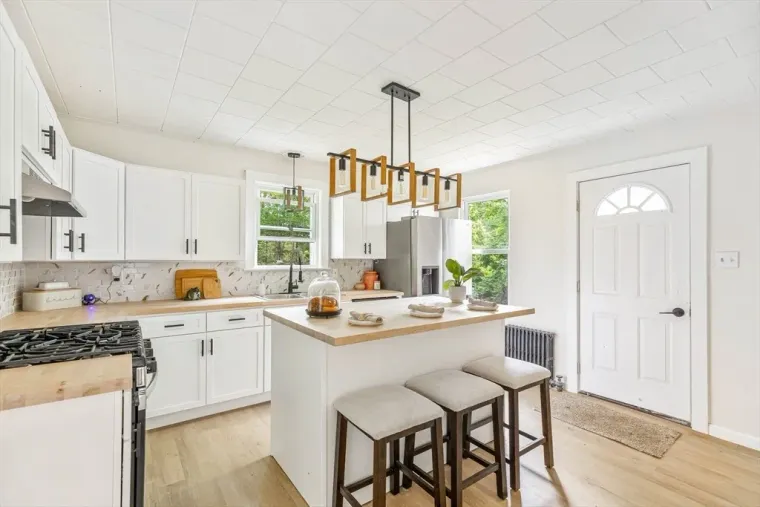
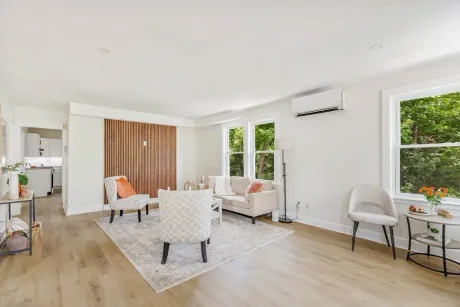
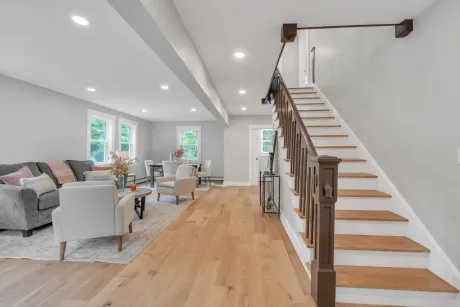
We actually buy and fix these homes
We’re not wholesalers flipping contracts. Here are real homes we’ve purchased and renovated.
Related guides
Plain-language Massachusetts guides that go deeper on the parts of this that matter most.
Other situations we buy houses in
Whatever is behind the sale, the process is the same — we buy as-is for cash across Massachusetts, on the date you choose.
Inherited a house
Probate-friendly, as-is, split easily among heirs.
Facing foreclosure
Move fast to stop the clock and protect your credit.
Going through divorce
A clean, fast sale that splits cleanly between parties.
Relocating
Sell on your schedule when a job or move comes up.
Tired landlord
Done with tenants and turnover? Sell with them in place.
House needs repairs
No fixes, no cleanup — we buy in any condition.
Downsizing
A simple, low-stress sale for the next chapter.
Vacant property
Stop paying to hold an empty house you don’t need.
Owe back taxes
Behind on property taxes? We can close before a tax taking.
Behind on payments
Behind on the mortgage? Sell to avoid foreclosure and protect your credit.
Fire-damaged house
We buy fire- and smoke-damaged homes as-is — no rebuild needed.
Water-damaged house
Flood, leak, or burst pipe? We buy as-is, mold and all.
House with mold
Mold problems? We buy as-is — no remediation needed.
Hoarder house
Leave everything — we handle the full clean-out.
Liens or title issues
Liens or title clouds? We work through them with you.
Condemned house
Code violations or condemned? We buy as-is and take it on.
Questions homeowners in this situation ask
Will you buy a house that has mold or active water damage?
The leak is still happening. Can I sell before it's fixed?
How fast can you close on a water-damaged house?
How much below market value will your offer be?
Do I have to clean it out or take anything to the dump?
Is this legit? My insurer denied the claim and I am wary of everyone right now.
Should I finish the insurance claim before I sell?
Will a flooded septic system affect my sale?
Where we buy houses in Massachusetts
We buy houses for cash statewide. These are some of the cities homeowners contact us from most.
- Sell my house fast in Worcester, MA
- Sell my house fast in Springfield, MA
- Sell my house fast in Lowell, MA
- Sell my house fast in Cambridge, MA
- Sell my house fast in Framingham, MA
- Sell my house fast in Quincy, MA
- Sell my house fast in New Bedford, MA
- Sell my house fast in Brockton, MA
- Sell my house fast in Lynn, MA
- Sell my house fast in Newton, MA
- Sell my house fast in Fall River, MA
- Sell my house fast in Plymouth, MA
Ready for your free cash offer?
No fees, no repairs, no obligation — just a fair, honest offer in 24 hours.