
Sell your house when downsizing in Massachusetts
Moving into a smaller, simpler home is a big step, and the house you're leaving can feel like a lot to deal with. We buy larger homes across Massachusetts as-is, for cash, with a fair no-obligation offer in 24 hours and a closing date you choose.
- No repairs or clean-out — keep what matters, leave the rest, we handle it after closing
- Pick a closing date that lines up with your next place, even months out
- No agent commissions, and we cover the typical closing costs
Offer request received
We’ll review your property and reach out shortly.
Yes — you can sell a Massachusetts house as-is when you are downsizing, without repairs, staging, or emptying it first. New England Home Partners gives you a written cash offer within 24 hours and closes on the date you pick, whether that is in as few as 7 days or months from now while you wait for your next place. There are no commissions and no fees, and we handle the clean-out after closing.
Updated September 2026
Sell a house for cash when you are downsizing in Massachusetts
Downsizing usually isn’t about the house at all. It’s about the stairs, the yard, the heating bill, the four bedrooms nobody sleeps in, or a wish to be closer to a daughter in Quincy or a son out of state. The house is simply the thing standing between you and the next chapter, and after thirty or forty years in it, the list of what it would take to “get it ready” can stop the whole plan before it starts.
You do not have to get it ready. New England Home Partners buys larger family homes across Massachusetts exactly as they are: dated kitchens, original bathrooms, a furnace on its last few winters, a basement and an attic full of forty years of belongings. We give you a written cash offer within 24 hours, you pick the closing date, and the clean-out and the repairs become ours after you go.
Why downsizing sales stall on the open market
Nothing about a long-owned family home is wrong. It is simply that a retail sale asks a great deal of a seller who is already managing a move:
- The house has to be empty and staged before the photos. That means sorting decades of belongings on a listing agent’s schedule rather than your own.
- Deferred maintenance surfaces in the inspection. A roof near the end of its life, knob-and-tube wiring, an old oil tank, or a tired septic system turns into a credit request or a price cut after you are already under agreement.
- The buyer’s lender sets the timeline. A financed buyer closes when the underwriter says so, which is difficult when you are trying to line the sale up with a new place.
- Showings never stop being disruptive, and they are harder still if mobility or health is part of why you are moving.
Our guide to what selling as-is means, and whether to repair first lays out when the pre-listing work pays for itself and when it does not.
Planning the move: right-sizing and sorting
Before you look at a single listing, write down what “smaller” has to mean: one level or a first-floor primary bedroom, the bedrooms you will actually use, how much maintenance you want (a condo association handling the roof, snow, and grounds is a different life from a small single-family with a yard), the places you need to be near, and the monthly carrying cost rather than the purchase price. A cheaper house with a high condo fee and old systems can cost more per month than the one you left. Many Massachusetts municipalities also offer a senior property tax exemption or deferral with local income and asset qualifications, and the assessor’s office in the town you are moving to can tell you in one phone call.
Then sort, which after thirty or forty years is the real work:
- Go room by room, smallest room first. A guest bathroom finished in an afternoon builds momentum that “all the photographs in the house” never will.
- Use five piles: keep, gift to a specific named person, sell, donate, discard. “Undecided” is how the project stalls.
- Measure the next place before you keep furniture, so you do not pay to move a dining set that will not fit.
- Digitize the paper. Photos, slides, and documents scan down to a drawer’s worth of originals.
- Handle specialty items separately. Firearms, ammunition, old paint and solvents, propane tanks, and pianos all have their own disposal or transport rules; your town’s public works or transfer station page lists household hazardous waste days.
- Get help for the volume. Estate sale companies, consignment shops, senior move managers, and junk haulers each solve a different slice.
If you sell to a buyer who takes the house with its contents, the discard pile can simply stay where it is.
How a cash offer works when you are downsizing
Here is what actually happens, start to finish, for a downsizing seller in Massachusetts:
- You call (508) 286-7942 or send the address through our cash offer form. We ask a few questions: the age of the roof and heating system, whether the house is on town sewer or a septic system, whether anyone else is on the deed, and roughly when you would like to be out.
- We walk the house once, usually for twenty to thirty minutes. We are not inspecting you or the housekeeping; we are pricing the work. If you have already moved in with family, photos and a video call often do the job.
- You get a written cash offer within 24 hours, with the reasoning behind it. Ask us how we got the number and we will show you.
- If you accept, we sign an as-is purchase and sale agreement. Massachusetts is an attorney-closing state, so a closing attorney runs the transaction. You are welcome to have your own attorney review the agreement, and we think it is a good idea.
- The attorney orders the title exam and the municipal lien certificate from your city or town, plus payoff figures for any mortgage, home equity line, or reverse mortgage. Those payoffs come out of the sale proceeds rather than your pocket.
- Loose ends get handled in the background. Homes on septic generally need a Title 5 inspection at transfer, with limited exceptions and, in some transactions, a written agreement about who takes responsibility for it — the details are in our Title 5 inspection guide, and your attorney can confirm what applies to you. The smoke and carbon monoxide detector certificate is another item the parties address in the agreement.
- You close on your date. The deed is recorded at the Registry of Deeds, the funds come by wire or bank check, and you hand over the keys. Take what matters and leave the rest exactly where it sits.
Your three realistic paths, side by side
| Path | Typical timeline | Out of pocket before closing | Certainty |
|---|---|---|---|
| Cash sale to us, as-is | Written offer in 24 hours; close in as few as 7 days, or months out on your date | None — no repairs, no clean-out, no commission | High: no lender, no appraisal, no inspection contingency |
| List as-is with an agent | Time on market, then the financed buyer’s timeline | Clean-out and basic prep usually still expected; commission at closing | Moderate: as-is listings still face inspections and financing |
| Update, then list | Months of contractor work before the sign goes up | Repairs up front, plus carrying costs while the work runs | Variable: a higher asking price, and more ways for the deal to slip |
What we need from you
- The address, and a rough sense of when you would like to be out.
- Who is on the deed, and whether a spouse, a trust, or someone holding a power of attorney also needs to sign.
- Whether there is a mortgage, a home equity line, or a reverse mortgage to pay off.
- Anything you already know about the roof, the heat, the electrical panel, and the septic or sewer.
- One walkthrough, or photos and a video call if you have already moved out.
That is genuinely the list. No repairs, no clean-out, no staging, no open houses.
The honest part: a cash offer is below full retail
A cash offer is below what a fully updated version of your house would fetch on the open market, and the reason is plain arithmetic. We pay for the repairs and updates, we carry the taxes, insurance, and utilities while that work happens, we pay the costs of reselling, and we absorb the risk that the job runs longer or costs more than we planned. Our offer has to leave room for all of that.
What matters is the net, not the headline. A retail price gets reduced by the agent’s commission, the pre-listing repairs and clean-out, whatever credit the buyer asks for after the inspection, the deed excise stamps, and each month of mortgage, taxes, insurance, and heat that passes before a closing that may or may not hold. Our number starts lower and then stops moving: there are no commissions, no fees, and we cover the typical closing costs. Money already owed against the house — the mortgage, any liens, unpaid taxes — always comes out of the proceeds. For a house that would show beautifully with a coat of paint, a listing may well net you more, and we will tell you that. For a house that needs real work you have no appetite to manage, the certain number often wins.
Timing, taxes, and the move itself
Two practical Massachusetts notes. First, the deed excise tax, sometimes called transfer stamps, is customarily the seller’s line item at closing; many direct buyers absorb it, and it should be spelled out in writing in the purchase and sale agreement. Our explainer on deed stamps and the transfer tax covers how it is calculated and who typically pays.
Second, selling a long-held home can raise capital gains questions, especially if the house has appreciated substantially over decades of ownership. There are federal rules on excluding gain from the sale of a primary residence, and they have conditions. We are not tax advisors, so please talk to a CPA or a Massachusetts attorney about your situation before you commit; our overview of taxes when you sell for cash is a starting point, not advice. General state tax information is published at mass.gov.
We buy across the state, from Worcester and the towns around it to the South Shore and all of Norfolk County, and the process is the same wherever your house is. You can see the four steps in more detail on how it works.
When the next chapter is ready, so are we
Downsizing is not an emergency, and we do not treat it like one. Most families we work with call once to understand the numbers, then go quiet for a few weeks while they look at condos, or wait for a spot in a community to open, and come back when the timing firms up. That is completely fine. Our offer comes with no obligation and no pressure to decide on the spot, and if listing turns out to be the better move for you, we will say so plainly.
When you are ready, call (508) 286-7942 or request your cash offer and we will have a written number to you within 24 hours. We are a family-owned company based in Norton, Massachusetts, and we have bought 230+ homes in this state — many of them from families doing exactly what you are doing now.
Three simple steps to a cash sale
Selling to us is straightforward and honest — here’s exactly how it goes.
Tell us about your house
Share a few details by form or phone — it takes about two minutes. No pressure, no obligation.
Get a fair cash offer
We review your home and recent local sales, then call you with a clear, no-obligation cash offer within 24 hours.
Close on your date
Accept and pick your closing date — as fast as 7 days, or whenever works for you. No repairs, no fees.
Selling to us vs. listing with an agent
A fast, certain, fee-free sale — with an honest look at the trade-off on price.
| Comparison factor | New England Home PartnersDirect cash buyer | Listing with an agent |
|---|---|---|
| Time to close | As fast as 7 days | 60–90+ days |
| Repairs & cleanup | None — we buy as-is | Often expected before listing |
| Showings | None | Multiple, on the buyer’s schedule |
| Fees & commissions | $0 | ~5–6% commission |
| Closing costs | We cover them | Typically paid by the seller |
| Financing fall-through risk | None — we pay cash | Common with buyer mortgages |
| Sale price | A fair cash offer (below full retail) | Potentially full retail — after fees, repairs & time |
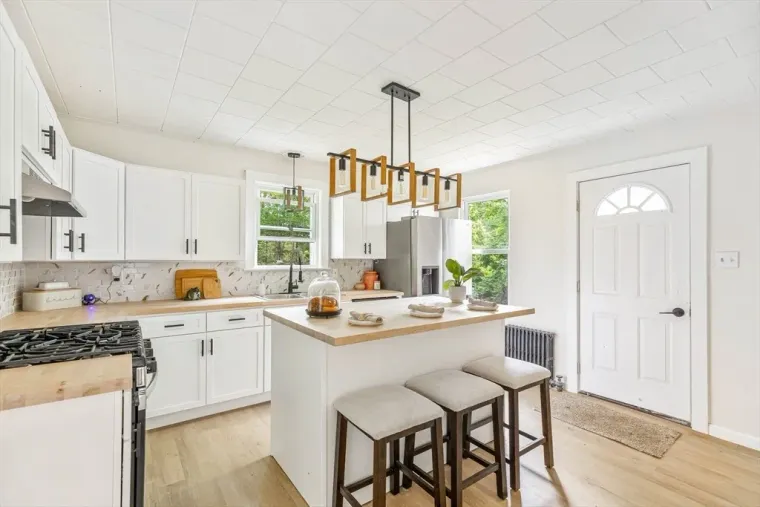
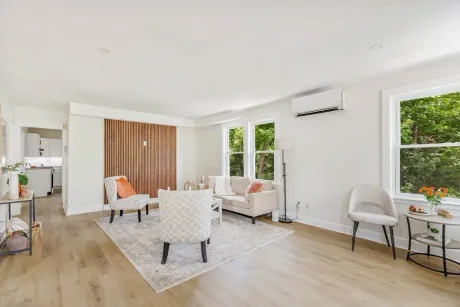
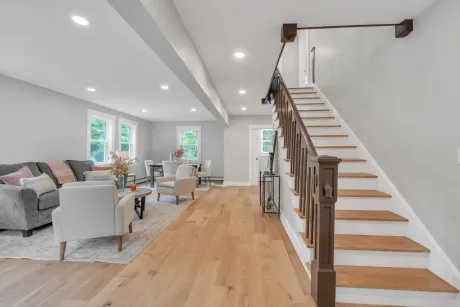
We actually buy and fix these homes
We’re not wholesalers flipping contracts. Here are real homes we’ve purchased and renovated.
Related guides
Plain-language Massachusetts guides that go deeper on the parts of this that matter most.
Other situations we buy houses in
Whatever is behind the sale, the process is the same — we buy as-is for cash across Massachusetts, on the date you choose.
Inherited a house
Probate-friendly, as-is, split easily among heirs.
Facing foreclosure
Move fast to stop the clock and protect your credit.
Going through divorce
A clean, fast sale that splits cleanly between parties.
Relocating
Sell on your schedule when a job or move comes up.
Tired landlord
Done with tenants and turnover? Sell with them in place.
House needs repairs
No fixes, no cleanup — we buy in any condition.
Downsizing
A simple, low-stress sale for the next chapter.
Vacant property
Stop paying to hold an empty house you don’t need.
Owe back taxes
Behind on property taxes? We can close before a tax taking.
Behind on payments
Behind on the mortgage? Sell to avoid foreclosure and protect your credit.
Fire-damaged house
We buy fire- and smoke-damaged homes as-is — no rebuild needed.
Water-damaged house
Flood, leak, or burst pipe? We buy as-is, mold and all.
House with mold
Mold problems? We buy as-is — no remediation needed.
Hoarder house
Leave everything — we handle the full clean-out.
Liens or title issues
Liens or title clouds? We work through them with you.
Condemned house
Code violations or condemned? We buy as-is and take it on.
Questions homeowners in this situation ask
We've lived here for decades and the house needs work. Is that a problem?
What if we haven't found our next place yet?
Do we have to clear out a lifetime of belongings first?
How much below market value will your offer be?
Is this legit, or is it one of those too-good-to-be-true offers?
Can you close after our new place is ready?
Should I sell my Massachusetts house before or after buying the next place?
Will I owe capital gains tax when I downsize?
Where we buy houses in Massachusetts
We buy houses for cash statewide. These are some of the cities homeowners contact us from most.
- Sell my house fast in Worcester, MA
- Sell my house fast in Springfield, MA
- Sell my house fast in Lowell, MA
- Sell my house fast in Cambridge, MA
- Sell my house fast in Framingham, MA
- Sell my house fast in Quincy, MA
- Sell my house fast in New Bedford, MA
- Sell my house fast in Brockton, MA
- Sell my house fast in Lynn, MA
- Sell my house fast in Newton, MA
- Sell my house fast in Fall River, MA
- Sell my house fast in Plymouth, MA
Ready for your free cash offer?
No fees, no repairs, no obligation — just a fair, honest offer in 24 hours.