
Sell a house when you owe back property taxes in Massachusetts
Falling behind on property taxes can feel like the town is closing in, but you usually still have time and options. When you sell, the overdue taxes can be paid directly out of the sale proceeds at closing — and we buy houses across Massachusetts as-is, for cash, with a fair no-obligation offer in 24 hours.
- Overdue property taxes get paid from the sale proceeds at closing
- We buy as-is — no repairs, no fees, no commissions, no showings
- Move on before the town completes a tax taking, on a date you choose
Offer request received
We’ll review your property and reach out shortly.
Yes — you can sell a Massachusetts house when you owe back property taxes. The overdue taxes, interest, and charges are typically paid from the sale proceeds at closing by the closing attorney, which clears the municipal lien and lets you move on before the city or town completes a tax taking. We buy as-is for cash, give you a written offer within 24 hours, and can close in as few as 7 days or on a later date you choose.
Updated September 2026
We buy houses with back taxes across Massachusetts
Property taxes are the bill that slips. A year goes sideways, an income changes, a relative’s house comes to you already behind, or a quarterly bill gets missed and the next one lands before the last one is paid. Then the interest and charges compound, the demand notices arrive, and the envelope with the city or town seal starts to feel like a verdict. It usually is not one.
Here is the plain version: owing back property taxes does not take away your right to sell. In nearly every sale we do where taxes are behind, the overdue amount is simply paid off at the closing table out of the money the sale produces, before anything comes to you. New England Home Partners buys houses across Massachusetts exactly as they are, for cash, with a written no-obligation offer within 24 hours and a closing date you choose — as soon as 7 days, or later if that suits you better.
How the overdue taxes get paid at closing
You do not need to come up with the back-tax money before you can sell. The mechanics are routine:
- The closing attorney orders a municipal lien certificate from the city or town. That document states what is owed against the property in taxes, water and sewer, and other municipal charges.
- The attorney then requests a written payoff or redemption figure good through a specific date. Interest and collection charges generally keep accruing, so the figure is date-sensitive and a later closing usually means a slightly larger payoff.
- At closing, that amount is paid directly to the municipality out of the sale proceeds, and the release or instrument of redemption is recorded so the lien no longer clouds title.
- Whatever is left after the taxes, the mortgage, and any other liens are paid is your equity, and it comes to you.
In short, the sale itself becomes the way the taxes get paid. Our step-by-step on selling before a tax taking covers the same ground in more detail, including how state and IRS liens differ from a municipal one once more than one is recorded.
Tax taking and tax title, in plain language
Massachusetts cities and towns have a defined process for collecting unpaid real estate taxes, and it helps to know the vocabulary rather than fear it.
Unpaid property taxes generally become a lien on the property itself, which is why they typically have to be cleared before clear title can pass. If the balance stays unpaid, the municipality can record an instrument of taking, which moves the account into what is called tax title. Interest on a tax title account generally runs at a higher statutory rate than ordinary late interest. From there, the city or town — or a third party that has purchased the tax title — can eventually ask the Massachusetts Land Court to foreclose the right of redemption, which is the step that can end your ownership.
Three things are worth holding onto. This is a sequence with notices along the way, not a single event. The account can generally be redeemed while the right of redemption still exists. And as long as you still hold title, you usually still have the ability to sell the property yourself and pay the taxes from the proceeds, which keeps the outcome in your hands rather than the town’s.
Deadlines, interest rates, and procedures vary by municipality and change over time, so please consult a Massachusetts attorney about where your specific account actually stands — especially if a taking has been recorded or you have received anything referencing Land Court. General information about municipal finance and state taxes is published at mass.gov. This page is information, not legal or tax advice.
How a cash sale works when you owe back taxes
- You call (508) 286-7942 or send the address through our cash offer form. Tell us roughly what is owed and whether you have received a notice of taking — even a rough figure helps us be accurate and honest with you from the first conversation.
- We look at the house once, in whatever condition it is in. Houses that have fallen behind on taxes have often fallen behind on maintenance too, and that is not a problem.
- A written cash offer lands within 24 hours, with the reasoning attached.
- We sign an as-is purchase and sale agreement. Massachusetts closings run through an attorney; you are welcome to have your own review it.
- The title exam and the municipal lien certificate go out. This is when the exact tax figure, plus any water, sewer, or other municipal charges, comes back in writing. If the account is in tax title, the treasurer issues a redemption figure instead.
- Everything owed is netted at the table. The settlement statement shows the tax payoff, any mortgage payoff, and other liens as line items against the sale price.
- You close on your date, the deed records at the Registry of Deeds, and the funds come by wire or bank check. The house, the repairs, and the tax account stop being yours the same afternoon.
The four-step version of this, without the tax specifics, is on how it works.
Waiting versus selling: what each path actually costs
| Path | Typical timeline | Out of pocket before closing | What happens to the tax account | Certainty |
|---|---|---|---|---|
| Cash sale to us, as-is | Offer in 24 hours; close in as few as 7 days, or on your date | None | Paid in full from proceeds at closing; lien released | High — no lender, no appraisal, no financing contingency |
| List on the open market | Time on market plus a financed buyer’s closing timeline | Repairs, clean-out, commission at closing | Paid at closing, but interest keeps running until then | Moderate — the buyer’s loan and inspection can undo it |
| Do nothing and try to catch up | Open-ended | Whatever you can pay toward the account | Interest and charges generally keep accruing; the account can move into tax title | Low — the town controls the next step |
What we need from you
- The property address and who is on the deed.
- Roughly what is owed, and copies of any notices from the collector, the treasurer, or a law firm acting for the town.
- Whether there is a mortgage, a home equity line, or any other lien — our guide to clearing a lien or title problem explains how multiple payoffs get sequenced.
- Access for one walkthrough, or photos if the house is vacant and you are out of the area.
- Your honest timeline, including any date the town has given you.
The honest part: the offer is below full retail, and the clock matters
Our offer is below what a renovated version of the house would sell for on the open market. We pay for the repairs, carry the taxes and insurance while the work runs, pay resale costs, and take on the risk that the job costs more than we expect, and the offer has to make room for all of that.
Now the net, which is the number that actually matters when taxes are behind. On a listing, the top-line price is reduced by the commission, the pre-sale repairs and clean-out, whatever credit a buyer asks for after the inspection, the deed excise stamps, and every month of mortgage, insurance, and accruing tax interest that passes before closing. Our number is lower and then it stops: no commissions, no fees, and we cover the typical closing costs. Who pays closing costs in a cash sale breaks that down line by line, and the carrying cost of holding a house shows what the waiting itself runs. If your house would show well and you have the runway to list it, a listing may net you more, and we will tell you so.
Resolving it before the town does
The relief most sellers in this spot describe is not really about money. It is about no longer opening the mail with a knot in the stomach. Selling on your own terms means the debt is settled at a closing you scheduled, for a price you agreed to, with any remaining equity going to you rather than being consumed by interest, legal costs, or a foreclosure of the right of redemption.
We buy in every city and town in our service area, including Worcester, Springfield, New Bedford, and the rest of Worcester County. If a taking has already been recorded, say so on the first call: timing gets tighter as the process advances, and we would rather be honest early than optimistic and wrong. Call (508) 286-7942 or request a no-obligation cash offer, and we will have a written number to you within 24 hours.
Three simple steps to a cash sale
Selling to us is straightforward and honest — here’s exactly how it goes.
Tell us about your house
Share a few details by form or phone — it takes about two minutes. No pressure, no obligation.
Get a fair cash offer
We review your home and recent local sales, then call you with a clear, no-obligation cash offer within 24 hours.
Close on your date
Accept and pick your closing date — as fast as 7 days, or whenever works for you. No repairs, no fees.
Selling to us vs. listing with an agent
A fast, certain, fee-free sale — with an honest look at the trade-off on price.
| Comparison factor | New England Home PartnersDirect cash buyer | Listing with an agent |
|---|---|---|
| Time to close | As fast as 7 days | 60–90+ days |
| Repairs & cleanup | None — we buy as-is | Often expected before listing |
| Showings | None | Multiple, on the buyer’s schedule |
| Fees & commissions | $0 | ~5–6% commission |
| Closing costs | We cover them | Typically paid by the seller |
| Financing fall-through risk | None — we pay cash | Common with buyer mortgages |
| Sale price | A fair cash offer (below full retail) | Potentially full retail — after fees, repairs & time |
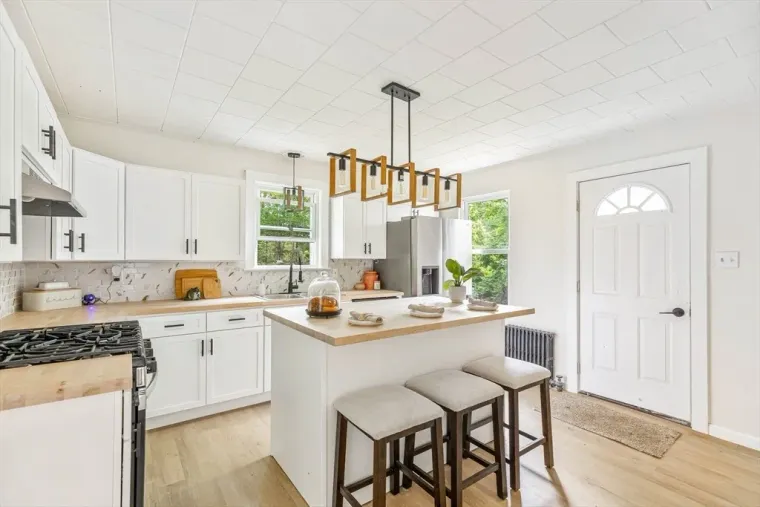
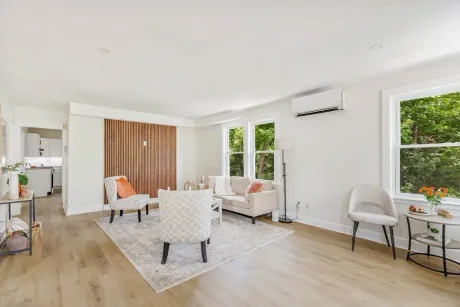
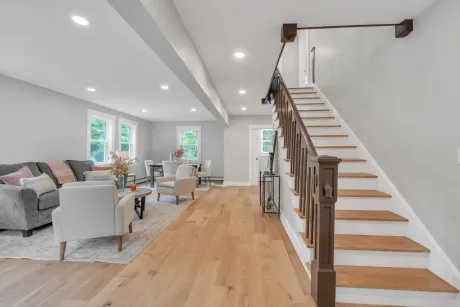
We actually buy and fix these homes
We’re not wholesalers flipping contracts. Here are real homes we’ve purchased and renovated.
Related guides
Plain-language Massachusetts guides that go deeper on the parts of this that matter most.
Other situations we buy houses in
Whatever is behind the sale, the process is the same — we buy as-is for cash across Massachusetts, on the date you choose.
Inherited a house
Probate-friendly, as-is, split easily among heirs.
Facing foreclosure
Move fast to stop the clock and protect your credit.
Going through divorce
A clean, fast sale that splits cleanly between parties.
Relocating
Sell on your schedule when a job or move comes up.
Tired landlord
Done with tenants and turnover? Sell with them in place.
House needs repairs
No fixes, no cleanup — we buy in any condition.
Downsizing
A simple, low-stress sale for the next chapter.
Vacant property
Stop paying to hold an empty house you don’t need.
Owe back taxes
Behind on property taxes? We can close before a tax taking.
Behind on payments
Behind on the mortgage? Sell to avoid foreclosure and protect your credit.
Fire-damaged house
We buy fire- and smoke-damaged homes as-is — no rebuild needed.
Water-damaged house
Flood, leak, or burst pipe? We buy as-is, mold and all.
House with mold
Mold problems? We buy as-is — no remediation needed.
Hoarder house
Leave everything — we handle the full clean-out.
Liens or title issues
Liens or title clouds? We work through them with you.
Condemned house
Code violations or condemned? We buy as-is and take it on.
Questions homeowners in this situation ask
Can I sell my house if I still owe back property taxes?
What happens if the town has already started a tax taking?
How fast can you close so I can resolve the taxes?
How much below market value will your offer be?
Do I have to pay the back taxes or fix the house before you will buy?
Is this legit? I have been getting a lot of letters and calls.
Where we buy houses in Massachusetts
We buy houses for cash statewide. These are some of the cities homeowners contact us from most.
- Sell my house fast in Worcester, MA
- Sell my house fast in Springfield, MA
- Sell my house fast in Lowell, MA
- Sell my house fast in Cambridge, MA
- Sell my house fast in Framingham, MA
- Sell my house fast in Quincy, MA
- Sell my house fast in New Bedford, MA
- Sell my house fast in Brockton, MA
- Sell my house fast in Lynn, MA
- Sell my house fast in Newton, MA
- Sell my house fast in Fall River, MA
- Sell my house fast in Plymouth, MA
Ready for your free cash offer?
No fees, no repairs, no obligation — just a fair, honest offer in 24 hours.