
Sell a house during a divorce in Massachusetts
Dividing a home is one of the harder parts of a divorce, and you don't have to navigate the sale alone. We buy houses across Massachusetts as-is, for cash, with a fair no-obligation offer in 24 hours and a closing date you choose.
- One clean cash sale with proceeds that divide simply between both parties
- Sell as-is — no repairs, no clean-out, no showings while you're moving on
- Flexible timing that can work around your attorneys and the court
Offer request received
We’ll review your property and reach out shortly.
Yes — a marital home can generally be sold during a Massachusetts divorce, but when both spouses are on the deed it usually takes both signatures or an order from the Probate and Family Court. New England Home Partners gives both parties the same written cash offer within 24 hours, buys as-is with no repairs, showings, or commissions, and closes on a date that fits your settlement. The result is one clear number at closing instead of a moving target you both have to keep negotiating.
Updated September 2026
Sell a house fast during a divorce in Massachusetts
The house is usually the largest thing a couple owns together, and in a divorce it is also the thing that keeps forcing you back into the same room. A traditional listing means agreeing on a repair list, an asking price, a stager, showings, every price cut, and every offer, all while the mortgage, taxes, and insurance keep being paid by someone. For a lot of couples, that is months of joint decisions at exactly the point where joint decisions are hardest.
New England Home Partners buys houses across Massachusetts as-is, for cash. We are family-owned and based in Norton. Both of you get the same written, no-obligation offer within 24 hours. There are no commissions, no fees, no repairs, and no showings, and you choose the closing date — as soon as 7 days, or held until your settlement is signed.
Who has to agree before the marital home can be sold
The short answer is that it depends on how title is held and where you are in the case, and your attorney is the person who should answer it for your situation. A few general principles come up almost every time.
- If both names are on the deed, both signatures are generally required to convey the property, regardless of who has been paying the mortgage.
- Massachusetts divorce cases typically trigger an automatic restraining order when the case is filed, which generally restricts either spouse from selling, transferring, or encumbering marital property without the other’s written consent or the court’s permission. This is standard and it is not a sign anything has gone wrong. It simply means a sale during a pending divorce usually needs either an agreement between you or an order from the Probate and Family Court.
- A house in one spouse’s name alone is still often marital property for purposes of dividing assets, even though the deed has one name on it.
- The court can authorize a sale when the parties cannot agree, though that route takes longer than an agreed sale.
None of this is legal advice, and the rules have real nuance. Consult a Massachusetts attorney about your case before you sign a purchase and sale agreement — divorce or not, most Massachusetts sales run through an attorney anyway. What it means practically is that we plan around your attorneys from the first conversation rather than presenting a signed deal to a court that has not been told about it.
How a cash offer works when you are selling through a divorce
- Either of you calls (508) 286-7942 or sends the address. We will ask early whether a case has been filed and who represents each of you.
- We walk the house once, typically under half an hour. Nothing is cleaned, repaired, staged, or removed first.
- A written offer goes out within 24 hours to both parties and, if you want, to both attorneys at the same time. No financing contingency, no obligation.
- Your attorneys confirm what authorization is needed — a written agreement between you, an approved separation agreement, or a court order.
- A purchase and sale agreement is signed by whoever the title and the court require. A Massachusetts closing attorney handles the paperwork; we use one on every purchase.
- Title is examined at the Registry of Deeds for the mortgage, any home equity line, liens, or attachments filed during the case.
- We close on your date. The mortgage payoff, municipal charges, and the deed excise tax come out of the proceeds. The attorney disburses the balance exactly as your agreement or the court’s order directs, and who pays closing costs in a Massachusetts cash sale explains which line items we cover.
The general sequence is on our how it works page, and the cash home sale closing process, step by step covers the closing side in more detail.
The four ways couples usually resolve the house
| Option | Typical timeline | Cost | What it requires of you both |
|---|---|---|---|
| Cash sale to us, as-is | As few as 7 days, or a date you both pick | No commission or repairs; we cover the usual closing costs | One decision, made once, on one number |
| List with an agent | Commonly 60–90+ days from listing to closing | Roughly 5–6% commission, plus repairs, staging, and concessions | Repeated joint decisions for months, and a show-ready house |
| One spouse buys the other out | Depends on refinancing | Refinance costs, and often a higher interest rate than the current loan | The keeping spouse has to qualify alone and produce the equity share |
| Both keep it for now | Open-ended | A shared mortgage, taxes, and insurance neither of you controls alone | Continued financial entanglement after the divorce is final |
A buyout is genuinely the right answer for some families, particularly when children are settled in a school district. It only works if the refinance is realistic on one income, so it is worth getting a straight answer from a lender before building a settlement around it.
What we need from you
- The property address and a general sense of the condition
- Who is on the deed, and whether a divorce case has been filed
- Both attorneys’ contact information, if you have counsel
- The mortgage servicer and whether there is a home equity line
- Your target timing, and whether you want the closing before or after the settlement is final
The honest part about price
A cash offer is below full retail. We buy as-is with our own money, pay the usual closing costs, take on the repairs and the carrying costs, and price in the risk of what one walkthrough cannot reveal. That is what the gap covers, and how cash home buyers calculate their offer lays out the arithmetic.
The number that matters in a divorce is what the two of you actually split. Against a listing, subtract roughly 5–6% in commission, the repairs an inspection will surface, any buyer credits, and several more months of a mortgage, insurance, and utilities you are both still tied to. Then add the cost that never appears on a settlement statement: the weeks of coordinating with someone you are in the middle of separating from. A certain number on a date you control is often worth more than a higher, slower, conditional one. If we look at your house and think a listing genuinely nets you more, we will tell you that instead.
Selling before the divorce is final, or after
Couples ask us this constantly, and there is no universal right answer — only a trade-off your attorneys should price out with you.
Selling before the divorce concludes turns the house into a known number early, which can make the rest of the settlement much easier to negotiate. Instead of arguing about what the property is worth, you are dividing an actual figure. It also stops the shared carrying costs sooner. The catch is that you generally need both signatures or court permission, and the proceeds usually need to be held or allocated in a way both attorneys agree to.
Selling after the settlement or judgment means the division is already decided, so the closing is mostly mechanical. The cost is time: more months of a joint mortgage, more months of upkeep on a house one or both of you has already emotionally left, and more exposure if something in the property fails while it sits.
Because we pay cash, we can accommodate either. We can close quickly if the settlement needs a number now, or sign an agreement and hold a later closing date while your case finishes. Tell us which you need and we will build around it rather than pushing our own calendar.
Either way, the closing needs a written instruction for the proceeds: who receives what, or that an attorney holds the funds in escrow until the judgment settles the split. Closing attorneys generally will not release contested proceeds without one. What you divide is the net equity after the mortgage, any home equity line, liens, municipal bills, and closing costs, not the sale price. And because Massachusetts is an attorney-closing state, a neutral closing attorney handles the deed, the payoffs, and the disbursement, which takes several decisions out of the space where two people are already disagreeing.
We buy throughout Massachusetts, including Boston, Lowell, Brockton, and every community in Norfolk County. When you are both ready to see a number, request a cash offer or call (508) 286-7942. There is no fee, no obligation, and no pressure on either of you.
Three simple steps to a cash sale
Selling to us is straightforward and honest — here’s exactly how it goes.
Tell us about your house
Share a few details by form or phone — it takes about two minutes. No pressure, no obligation.
Get a fair cash offer
We review your home and recent local sales, then call you with a clear, no-obligation cash offer within 24 hours.
Close on your date
Accept and pick your closing date — as fast as 7 days, or whenever works for you. No repairs, no fees.
Selling to us vs. listing with an agent
A fast, certain, fee-free sale — with an honest look at the trade-off on price.
| Comparison factor | New England Home PartnersDirect cash buyer | Listing with an agent |
|---|---|---|
| Time to close | As fast as 7 days | 60–90+ days |
| Repairs & cleanup | None — we buy as-is | Often expected before listing |
| Showings | None | Multiple, on the buyer’s schedule |
| Fees & commissions | $0 | ~5–6% commission |
| Closing costs | We cover them | Typically paid by the seller |
| Financing fall-through risk | None — we pay cash | Common with buyer mortgages |
| Sale price | A fair cash offer (below full retail) | Potentially full retail — after fees, repairs & time |
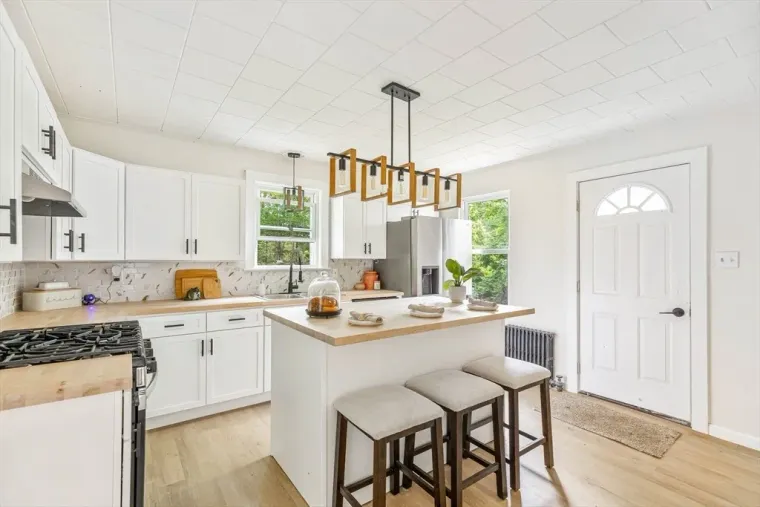
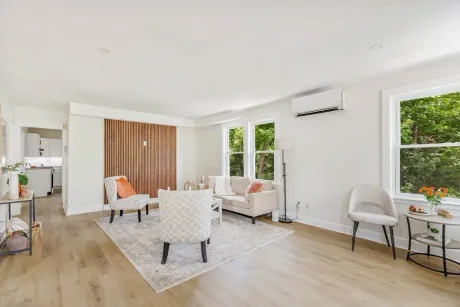
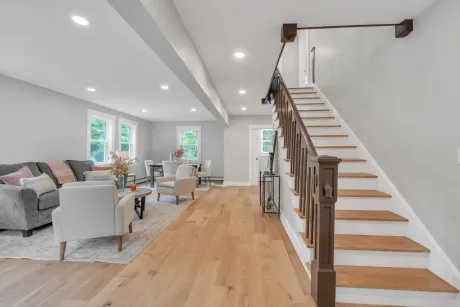
We actually buy and fix these homes
We’re not wholesalers flipping contracts. Here are real homes we’ve purchased and renovated.
Related guides
Plain-language Massachusetts guides that go deeper on the parts of this that matter most.
Other situations we buy houses in
Whatever is behind the sale, the process is the same — we buy as-is for cash across Massachusetts, on the date you choose.
Inherited a house
Probate-friendly, as-is, split easily among heirs.
Facing foreclosure
Move fast to stop the clock and protect your credit.
Going through divorce
A clean, fast sale that splits cleanly between parties.
Relocating
Sell on your schedule when a job or move comes up.
Tired landlord
Done with tenants and turnover? Sell with them in place.
House needs repairs
No fixes, no cleanup — we buy in any condition.
Downsizing
A simple, low-stress sale for the next chapter.
Vacant property
Stop paying to hold an empty house you don’t need.
Owe back taxes
Behind on property taxes? We can close before a tax taking.
Behind on payments
Behind on the mortgage? Sell to avoid foreclosure and protect your credit.
Fire-damaged house
We buy fire- and smoke-damaged homes as-is — no rebuild needed.
Water-damaged house
Flood, leak, or burst pipe? We buy as-is, mold and all.
House with mold
Mold problems? We buy as-is — no remediation needed.
Hoarder house
Leave everything — we handle the full clean-out.
Liens or title issues
Liens or title clouds? We work through them with you.
Condemned house
Code violations or condemned? We buy as-is and take it on.
Questions homeowners in this situation ask
Do both spouses have to agree to sell the house?
How are the proceeds divided after the sale?
Can we sell quickly to finalize things, or wait for the divorce to settle?
How much below market will the offer be?
What if we owe more than the house is worth?
My spouse and I barely speak. Can you handle that?
Is the equity always split fifty-fifty in Massachusetts?
Do we owe capital gains tax when we sell the marital home?
Where we buy houses in Massachusetts
We buy houses for cash statewide. These are some of the cities homeowners contact us from most.
- Sell my house fast in Worcester, MA
- Sell my house fast in Springfield, MA
- Sell my house fast in Lowell, MA
- Sell my house fast in Cambridge, MA
- Sell my house fast in Framingham, MA
- Sell my house fast in Quincy, MA
- Sell my house fast in New Bedford, MA
- Sell my house fast in Brockton, MA
- Sell my house fast in Lynn, MA
- Sell my house fast in Newton, MA
- Sell my house fast in Fall River, MA
- Sell my house fast in Plymouth, MA
Ready for your free cash offer?
No fees, no repairs, no obligation — just a fair, honest offer in 24 hours.