
Sell a condemned house or one with code violations in Massachusetts
A condemned home, or one cited for code violations, can feel impossible to sell and exhausting to hold. We buy houses across Massachusetts as-is, for cash, and take on the violations and repairs ourselves, so you do not have to fix anything or bring it up to code first.
- We buy as-is — you do not have to fix anything or bring it up to code first
- We take on the violations and the repairs, and deal with the city or town ourselves
- A fair, no-obligation cash offer in 24 hours, and you pick the closing date
Offer request received
We’ll review your property and reach out shortly.
Yes — you can sell a condemned house or one with open building or sanitary code violations in Massachusetts. We buy as-is for cash and take on the repairs and the orders ourselves, so you do not have to make the home habitable, pull permits, or satisfy the city first. We give you a written no-obligation offer within 24 hours, you pick the closing date, and we can close in as few as 7 days.
Updated September 2026
Sell a condemned house for cash in Massachusetts
A notice that your house has been condemned, or a violation list from the building department, lands hard. It usually arrives with a deadline, sometimes with the threat of fines, and always with the practical reality that you cannot just put the place on the market like any other house. Most owners we talk to did not get here through carelessness. The house fell behind after an illness or a death in the family, sat vacant too long, took fire or water damage, or simply outran what one person could afford to maintain.
Two things are true. A condemned or cited house can still be sold. And you do not have to fix it first.
New England Home Partners buys houses across Massachusetts exactly as they stand, including condemned homes and homes with open orders. A written no-obligation cash offer within 24 hours, a closing date you pick, and the repairs and the violations become ours.
What “condemned” generally means in Massachusetts
In plain terms, a home is usually condemned when a local official determines it is not safe or fit to live in and orders that nobody occupy it until the problems are corrected. In Massachusetts that judgment typically traces back to the State Sanitary Code (105 CMR 410), which sets minimum standards for fitness for human habitation — working heat, safe water and plumbing, sound structure, freedom from serious hazards — enforced by the local board of health. The building commissioner or inspector can act separately under the state building code where the structure itself is unsafe.
That can produce a few different outcomes you may have already run into:
- An order to correct specific violations by a stated time, sometimes carrying fines.
- A finding that the dwelling is unfit for human habitation, requiring it to be vacated.
- A formal condemnation, meaning the property cannot legally be occupied as it stands.
- A board-up of doors and windows to secure an empty structure.
- Vacant or distressed property registration, which many Massachusetts cities and towns require by local ordinance, sometimes with an annual fee.
These steps exist to protect people, but for an owner they can feel like a trap. The house cannot be lived in, cannot be financed by an ordinary buyer, and cannot be sold the usual way, while the taxes, insurance, and fines keep accruing. That gap is where a direct cash buyer fits.
Enforcement, fines, and whether anything follows the property to a new owner vary from one municipality to the next, and in serious cases a court can get involved in how a property is repaired. Please have a Massachusetts attorney review the specific orders you have received; general information about the state sanitary code and housing standards is published at mass.gov. This page is information, not legal advice.
Not every violation is the same problem
“Code violation” covers several different things, enforced by different offices, with very different consequences at sale. A missing handrail and an illegal third unit are not the same problem:
- Building code violations such as unsafe stairs, structure, or egress come from the building inspector or commissioner and are cleared with a permit, licensed work, and re-inspection. A house is often financeable again once they are corrected.
- Open or expired permits mean scheduling final inspections and sometimes opening finished work, and they commonly surface late and stall a financed closing.
- Unpermitted work discovered after the fact needs retroactive permitting and work brought to current code, and it can be the most expensive category by a wide margin.
- Sanitary code violations covering heat, water, sewage, infestation, or habitability come from the board of health and are cleared by correcting the cited conditions and passing re-inspection.
- Zoning violations, such as an unlawful unit or a non-conforming addition, need a variance, a special permit, or removal of the use. They are slow and uncertain, and rarely fixable on a sale timeline.
- Unpaid fines and municipal charges surface on the municipal lien certificate and are paid or negotiated at closing.
An open order is generally an enforcement matter between the owner and the municipality rather than a defect in title, so it does not by itself stop a deed from being recorded. The state maintains the building code framework through its Board of Building Regulations and Standards, but enforcement is local, and two neighboring towns can handle the same condition differently.
Before deciding anything, request the full file from the building department and the board of health in writing, ask which orders must be cured for occupancy and which are correction-on-notice, and have the treasurer or collector quantify the fines and charges. If you are weighing a cure, get two written contractor scopes that include permit and inspection time. And hand a buyer the notices, orders, and permit history rather than letting them find it.
Why these houses cannot be financed or listed normally
Most buyers need a mortgage, and lenders generally will not finance a dwelling that is condemned or carries serious open violations, because it does not meet their condition standards. The appraisal fails, the required inspection fails, or the underwriter simply declines. That removes the great majority of the buyer pool before the house is even shown, which is why listings on properties like this tend to sit and then quietly expire. If yours has already been through that, how to sell a house that will not sell is worth a read.
Meanwhile the holding costs do not pause. Taxes and any mortgage keep running, a vacancy-rated insurance policy usually costs more than standard coverage and may be hard to keep in force, utilities have to stay on enough to prevent freeze damage, and registration fees or fines can be added on top. The carrying costs of a vacant house puts the arithmetic in one place.
How a cash sale works with open orders on the house
- Call (508) 286-7942 or send the address through our cash offer form. Tell us which department is involved, what the orders say, and whether the house is boarded or posted.
- We inspect what can be safely inspected. If entry is unsafe or prohibited, we work from the exterior, the orders themselves, and photographs. We never ask an owner to enter a posted building.
- A written cash offer within 24 hours, built from what the house will be worth once it is legally habitable, minus the permitted work, the carrying costs, and the risk.
- An as-is purchase and sale agreement that says plainly who is responsible for the outstanding orders after closing, so nothing is left to assumption. Massachusetts closings run through an attorney, and yours is welcome to review it.
- Title exam and municipal items. The closing attorney orders the municipal lien certificate, which is where accumulated fines, unpaid taxes, and water and sewer charges surface, and requests payoffs for any mortgage or lien.
- Property-specific items get addressed. Pre-1978 homes bring federal lead paint disclosure and, in Massachusetts, their own lead law considerations, which our lead paint disclosure guide explains. If the property is on septic, a Title 5 inspection is generally triggered at transfer, with limited exceptions. If the house is also full of belongings, leave them — see selling a hoarder house.
- Closing on your date. The deed records at the Registry of Deeds, funds come by wire or bank check, and the permits, the contractors, and the conversations with the inspector become ours. The short version is on how it works.
Fix it, list it, or sell it as it stands
| Path | Typical timeline | Out of pocket before closing | Certainty |
|---|---|---|---|
| Cash sale to us, as-is | Written offer in 24 hours; close in as few as 7 days or on your date | None — no repairs, no permits, no clean-out, no commission | High: no lender, no appraisal, no habitability requirement at closing |
| Bring it up to code, then list | Months of permitting, licensed trades, and re-inspection | Full cost of the work, plus taxes, insurance, and fines throughout | Low to moderate: scope grows, inspections gate every stage |
| List it condemned | Long time on market; nearly all financed buyers are excluded | Carrying costs and fines while it sits; commission at closing | Low: investor offers only, and many fall through on diligence |
What we need from you
- The address and who is on the deed.
- Copies of every notice, order, or citation you have received, and the name of the department that issued them.
- Whether the house is posted, boarded, or has had utilities shut off.
- Whether there is a mortgage, unpaid taxes, or accumulated fines.
- Safe access if the building can be entered, or permission to view the exterior if it cannot.
No repairs, no permits, no estimates, no clean-out. We would rather see the orders than a contractor’s proposal.
The honest part: a cash offer here is well below full retail
Our offer on a condemned house is meaningfully below what the same address is worth once it is repaired and legally occupiable. That distance is not a negotiating posture, it is the job: permits, licensed electrical and plumbing work, structural repairs, bringing systems to current code, inspections at each stage, months of taxes and insurance while it runs, resale costs, and the near certainty that opening the walls reveals more. Condemned houses are the category where the scope grows most often, and we price for that rather than come back later asking for a discount.
Look at the net and the certainty together. Restoring the house yourself produces the highest possible sale price and also requires the most money you may not have, the most time, and the acceptance of real risk if the work stalls or an inspection fails. Listing as-is invites offers that mostly cannot close. Our number is lower and it is firm: no commission, no fees, we cover the typical closing costs, and it does not change after a financing contingency or a second inspection because there is neither. What is already owed against the house — the mortgage, back taxes, recorded fines — still comes out of the proceeds at closing, which is true on every path.
Handing off the orders, not just the house
For most owners in this position the relief is not really the money. It is the end of the letters, the deadlines, the fines, and the feeling that a building you cannot enter is quietly ruining your year. After closing, the town’s list stops being your list. If the inspector calls anyone, they call us.
We buy condemned and cited houses in the places where older housing stock and active code enforcement meet most often, including Springfield, Fall River, Lowell, and every community in Hampden County. Bring us the worst file you have.
Call (508) 286-7942 or request a no-obligation cash offer and you will have a written number within 24 hours, along with an honest read on what the orders mean for timing. We are family-owned, based in Norton, and we have bought 230+ homes in Massachusetts, including houses the city had already given up on.
Three simple steps to a cash sale
Selling to us is straightforward and honest — here’s exactly how it goes.
Tell us about your house
Share a few details by form or phone — it takes about two minutes. No pressure, no obligation.
Get a fair cash offer
We review your home and recent local sales, then call you with a clear, no-obligation cash offer within 24 hours.
Close on your date
Accept and pick your closing date — as fast as 7 days, or whenever works for you. No repairs, no fees.
Selling to us vs. listing with an agent
A fast, certain, fee-free sale — with an honest look at the trade-off on price.
| Comparison factor | New England Home PartnersDirect cash buyer | Listing with an agent |
|---|---|---|
| Time to close | As fast as 7 days | 60–90+ days |
| Repairs & cleanup | None — we buy as-is | Often expected before listing |
| Showings | None | Multiple, on the buyer’s schedule |
| Fees & commissions | $0 | ~5–6% commission |
| Closing costs | We cover them | Typically paid by the seller |
| Financing fall-through risk | None — we pay cash | Common with buyer mortgages |
| Sale price | A fair cash offer (below full retail) | Potentially full retail — after fees, repairs & time |
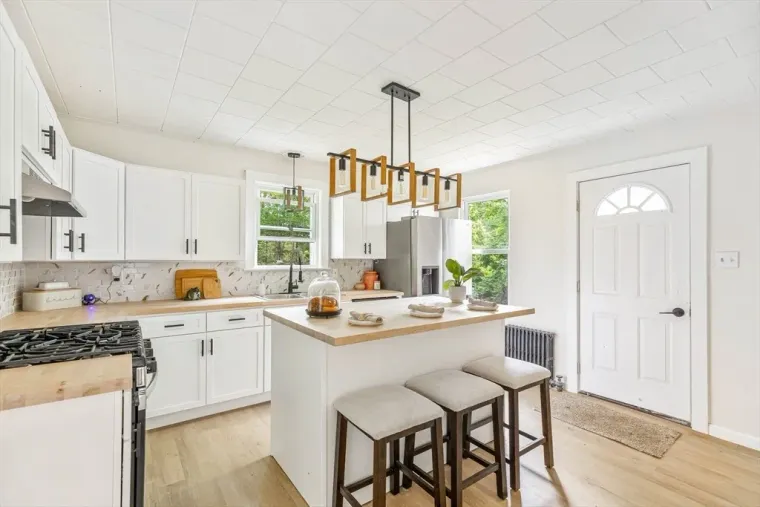
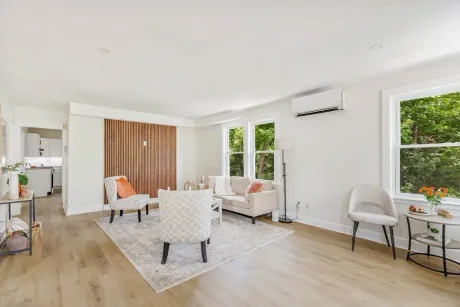
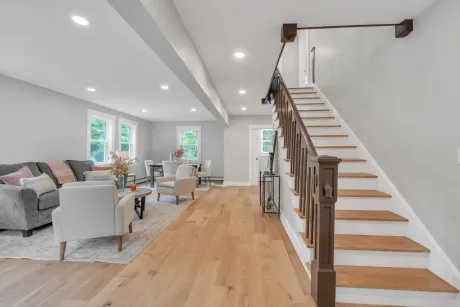
We actually buy and fix these homes
We’re not wholesalers flipping contracts. Here are real homes we’ve purchased and renovated.
Related guides
Plain-language Massachusetts guides that go deeper on the parts of this that matter most.
Other situations we buy houses in
Whatever is behind the sale, the process is the same — we buy as-is for cash across Massachusetts, on the date you choose.
Inherited a house
Probate-friendly, as-is, split easily among heirs.
Facing foreclosure
Move fast to stop the clock and protect your credit.
Going through divorce
A clean, fast sale that splits cleanly between parties.
Relocating
Sell on your schedule when a job or move comes up.
Tired landlord
Done with tenants and turnover? Sell with them in place.
House needs repairs
No fixes, no cleanup — we buy in any condition.
Downsizing
A simple, low-stress sale for the next chapter.
Vacant property
Stop paying to hold an empty house you don’t need.
Owe back taxes
Behind on property taxes? We can close before a tax taking.
Behind on payments
Behind on the mortgage? Sell to avoid foreclosure and protect your credit.
Fire-damaged house
We buy fire- and smoke-damaged homes as-is — no rebuild needed.
Water-damaged house
Flood, leak, or burst pipe? We buy as-is, mold and all.
House with mold
Mold problems? We buy as-is — no remediation needed.
Hoarder house
Leave everything — we handle the full clean-out.
Liens or title issues
Liens or title clouds? We work through them with you.
Condemned house
Code violations or condemned? We buy as-is and take it on.
Questions homeowners in this situation ask
Can I actually sell a house that has been condemned?
Do I have to fix the violations or bring it up to code before selling?
What about the open orders from the city or town?
How much below market value will your offer be?
Do I have to clean it out or secure the building first?
Is this legit? The fines keep coming and I feel cornered.
Do code violations transfer to the new owner?
Should I pull permits and fix the violations before I list?
Where we buy houses in Massachusetts
We buy houses for cash statewide. These are some of the cities homeowners contact us from most.
- Sell my house fast in Worcester, MA
- Sell my house fast in Springfield, MA
- Sell my house fast in Lowell, MA
- Sell my house fast in Cambridge, MA
- Sell my house fast in Framingham, MA
- Sell my house fast in Quincy, MA
- Sell my house fast in New Bedford, MA
- Sell my house fast in Brockton, MA
- Sell my house fast in Lynn, MA
- Sell my house fast in Newton, MA
- Sell my house fast in Fall River, MA
- Sell my house fast in Plymouth, MA
Ready for your free cash offer?
No fees, no repairs, no obligation — just a fair, honest offer in 24 hours.