
Sell a fire-damaged house in Massachusetts
After a fire, the last thing you should have to take on is a full rebuild just to sell. We buy fire- and smoke-damaged houses across Massachusetts as-is, for cash — no repairs, no cleanup, and a fair, no-obligation offer in 24 hours.
- We buy as-is — no rebuilding, no repairs, no cleaning up smoke or soot
- Minor to severe damage is fine; the condition affects the offer, not whether we make one
- A clear cash offer with no fees or commissions, and you choose the closing date
Offer request received
We’ll review your property and reach out shortly.
Yes — New England Home Partners buys fire-damaged houses in Massachusetts as-is for cash, from light smoke and soot to a serious structural burn or a board-up. You do not rebuild, repair, clean, or get estimates first: we give you a written no-obligation cash offer within 24 hours, you pick the closing date, and we take on the restoration and the permits after closing.
Updated September 2026
Sell a fire-damaged house fast for cash in Massachusetts
A house fire does not end when the trucks leave. What is left is a building full of smoke and soot, thousands of gallons of suppression water soaking into floors and framing, a board-up on the windows, and a family living somewhere else while an adjuster works through a claim. Somewhere in the middle of that comes a question nobody is ready for: what do we do with the house.
Rebuilding is one answer, and for some owners it is the right one. It is also months of contractors, permits, inspections, and decisions, usually while you are paying for two places to live. If that is not the life you want for the next year, you should know the other answer is real: you can sell the house exactly as it stands, fire damage and all.
New England Home Partners buys fire-damaged houses across Massachusetts in any condition. We give you a written, no-obligation cash offer within 24 hours, you pick the closing date, and the rebuild becomes our problem.
Why fire-damaged homes rarely sell the traditional way
The difficulty is structural to how retail sales work, and almost none of it is the seller’s fault:
- Financing falls through. Most buyers need a mortgage, and lenders generally will not lend on a house that is not habitable. An appraisal or a required inspection stops the loan, so the buyers who can qualify usually cannot close on this house.
- The buyer cannot get insurance. A new owner typically needs a homeowner’s policy at closing, and a burned or boarded-up structure is hard to insure until it is repaired.
- The scope is unknowable from the doorway. Smoke migrates through wall cavities and ductwork, and suppression water reaches places the flames never did. A typical buyer cannot price that, so they walk.
- Your own coverage may narrow. Once the house is empty, standard homeowners coverage often changes or lapses in favor of a vacancy-rated policy, while taxes, utilities, and any mortgage keep running. The arithmetic of that wait is in carrying costs of a vacant house.
- The town may be involved. After a serious fire the building inspector or the local board of health can issue orders, require a board-up, or deem the structure unfit until it is repaired — which is its own obstacle to a normal sale. We cover that path in selling a condemned house or one with open code violations.
Because we pay cash and buy as-is, none of those apply. There is no lender appraisal, no financing contingency, and no requirement that the house be habitable at closing.
How a cash offer works after a fire
- Call (508) 286-7942 or send the address through our cash offer form. Tell us roughly what happened, whether the structure is boarded up, and whether the town has posted or cited the property.
- We look at the house. If it is not safe to enter, we work from the exterior, the fire department’s account, and whatever photos exist. We never ask you to go into an unsafe building for us.
- A written cash offer arrives within 24 hours, priced from what the house will be worth restored, minus the rebuild and the risk. How cash home buyers calculate their offer shows how that calculation is built.
- We sign an as-is purchase and sale agreement. Massachusetts closings run through an attorney; have your own review it if you want a second set of eyes, and talk to one before signing anything that touches your insurance claim.
- Title work begins. The closing attorney runs the title exam and orders the municipal lien certificate, along with payoffs for any mortgage. If your mortgage company is holding insurance proceeds in escrow, this is the stage where your attorney and the lender sort out how those funds are treated.
- Open items get settled in writing. Who satisfies any outstanding order from the building inspector or board of health, and how the smoke and carbon monoxide detector certificate is handled, are negotiated in the agreement rather than left vague — see our note on the smoke and CO detector certificate.
- You close on your date. The deed records at the Registry of Deeds, funds come by wire or bank check, and the rebuild, the debris, and the permits are ours. The four-step overview lives on how it works.
Rebuild, list, or sell as-is
| Path | Typical timeline | Out of pocket before closing | Certainty |
|---|---|---|---|
| Cash sale to us, as-is | Written offer in 24 hours; close in as few as 7 days or on your date | None — no cleanup, no repairs, no commission | High: no lender, no appraisal, no insurability problem |
| Rebuild with insurance proceeds, then list | Months of permitting and construction, then time on market | Deductible, any gap between the claim and the true cost, plus carrying costs throughout | Variable: change orders, hidden smoke and water damage, contractor schedules |
| List it damaged on the open market | Long time on market; most financed buyers are excluded | Board-up, insurance, taxes, and utilities while it sits; commission at closing | Low to moderate: cash investors bid, and financed offers tend to collapse |
What we need from you
- The address, and who is on the deed.
- A short account of the fire, and the fire department’s report or incident number if you have it.
- Your insurance carrier and adjuster’s contact, and whether a claim is open, settled, or held by your mortgage company.
- Any notices, orders, or condemnation paperwork from the town.
- Access, or permission to view the exterior if entry is unsafe.
You do not need estimates, a restoration contractor, or a cleaned-up house. We would rather see it as it is.
Before you decide: the policy, the code, and the first few weeks
Two things set the ceiling on a rebuild, and both are worth pinning down before you choose a path.
How your policy pays. An actual cash value policy generally pays what the damaged property was worth at the time of the loss, depreciation subtracted. A replacement cost policy typically pays the depreciated amount first and releases the remaining “recoverable depreciation” only after you complete and document the repairs, so if you sell rather than rebuild, you may never see that holdback. Read the declarations page and ask your adjuster which structure you have. It also helps to get your own scope of loss: adjusters and restoration contractors both write estimates for a living, and their numbers often differ. A public adjuster works for you rather than the carrier, for a percentage fee.
What the building department will require. Structural repair generally needs a municipal building permit, with electrical and plumbing permits pulled by licensed trades. When damage is extensive enough, a rebuild is generally reviewed against current code rather than the code the house was built under, which can pull in updated wiring, hardwired and interconnected alarms, egress windows in finished basements, insulation and energy requirements, and sometimes a Title 5 review if the septic system is disturbed. A house that needed “a new roof and three rooms” can turn into a gut. The Department of Fire Services and the Board of Building Regulations and Standards publish the governing material, and most inspectors will tell you plainly what a rebuild of your scope would trigger if you ask early.
Whichever path you take, the first few weeks look the same: get the claim number, the adjuster’s name, and the declarations page; secure the property; notify your insurer in writing that the house is unoccupied and ask what coverage now applies; get the fire department’s report; keep paying the mortgage and taxes if you can, because a fire does not pause either; and talk to a Massachusetts attorney before signing any assignment of insurance proceeds.
The honest part: below full retail, and why
A cash offer on a fire-damaged house is below what the restored house would sell for, and the reason is not complicated. We pay for the demolition, the structural work, the smoke and odor remediation, the systems, and the finishes. We carry the taxes, insurance, and utilities for the months that takes. We pay the costs of reselling, and we absorb the risk that opening a wall reveals damage nobody could see. The offer has to leave room for all of it.
What matters more than the headline is what reaches you and how sure it is. A restored house sells for more, but only after the deductible, the gap between what the policy pays and what the work actually costs, months of carrying costs on a house you cannot live in, the commission, and the deed excise. Our number has no commission and no fees, we cover the typical closing costs, and it does not move after the inspection because there is no inspection contingency. Money already owed against the house still comes out of the proceeds. For an owner with the appetite and the cash flow to manage a rebuild, restoring can net more; for most families a few weeks after a fire, a certain number and a closing date they control is worth a great deal.
One more honest note: Massachusetts sellers generally still have to be truthful about what they know, and a fire is not something to paper over. Selling as-is does not erase that — it just means we already know, and we are pricing it. Our guide on disclosure when selling as-is explains the difference between as-is and silence.
After the fire, the next step is yours to pick
We buy fire-damaged houses in the cities where older, closely built housing stock makes these calls most common — Lynn, Brockton, Worcester — and everywhere else we serve, including all of Essex County. Fire, insurance, and the local fire department’s role are all areas where you deserve real advice from your own people; the Department of Fire Services publishes general information at mass.gov, and a Massachusetts attorney should review anything involving your claim or an order from the town. This page is information, not legal or insurance advice.
There is no rush from us and no pressure. When you want a number, call (508) 286-7942 or request a no-obligation cash offer, and you will have it in writing within 24 hours. We are family-owned, based in Norton, and we have bought 230+ homes in Massachusetts, including houses other buyers would not walk into.
Three simple steps to a cash sale
Selling to us is straightforward and honest — here’s exactly how it goes.
Tell us about your house
Share a few details by form or phone — it takes about two minutes. No pressure, no obligation.
Get a fair cash offer
We review your home and recent local sales, then call you with a clear, no-obligation cash offer within 24 hours.
Close on your date
Accept and pick your closing date — as fast as 7 days, or whenever works for you. No repairs, no fees.
Selling to us vs. listing with an agent
A fast, certain, fee-free sale — with an honest look at the trade-off on price.
| Comparison factor | New England Home PartnersDirect cash buyer | Listing with an agent |
|---|---|---|
| Time to close | As fast as 7 days | 60–90+ days |
| Repairs & cleanup | None — we buy as-is | Often expected before listing |
| Showings | None | Multiple, on the buyer’s schedule |
| Fees & commissions | $0 | ~5–6% commission |
| Closing costs | We cover them | Typically paid by the seller |
| Financing fall-through risk | None — we pay cash | Common with buyer mortgages |
| Sale price | A fair cash offer (below full retail) | Potentially full retail — after fees, repairs & time |
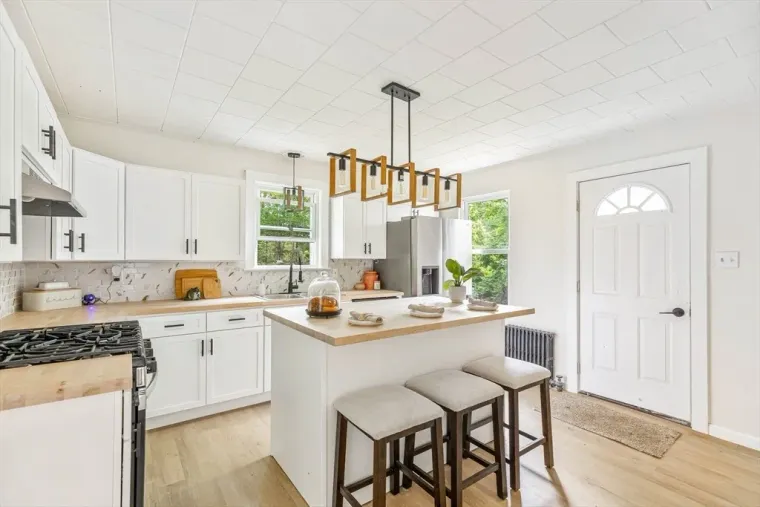
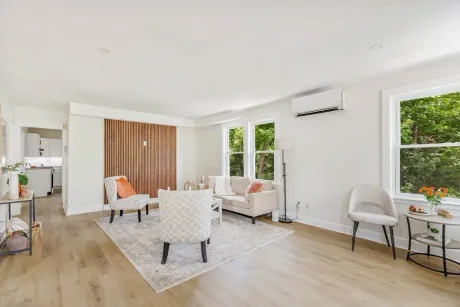
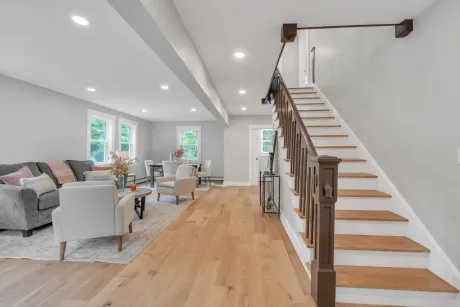
We actually buy and fix these homes
We’re not wholesalers flipping contracts. Here are real homes we’ve purchased and renovated.
Related guides
Plain-language Massachusetts guides that go deeper on the parts of this that matter most.
Other situations we buy houses in
Whatever is behind the sale, the process is the same — we buy as-is for cash across Massachusetts, on the date you choose.
Inherited a house
Probate-friendly, as-is, split easily among heirs.
Facing foreclosure
Move fast to stop the clock and protect your credit.
Going through divorce
A clean, fast sale that splits cleanly between parties.
Relocating
Sell on your schedule when a job or move comes up.
Tired landlord
Done with tenants and turnover? Sell with them in place.
House needs repairs
No fixes, no cleanup — we buy in any condition.
Downsizing
A simple, low-stress sale for the next chapter.
Vacant property
Stop paying to hold an empty house you don’t need.
Owe back taxes
Behind on property taxes? We can close before a tax taking.
Behind on payments
Behind on the mortgage? Sell to avoid foreclosure and protect your credit.
Fire-damaged house
We buy fire- and smoke-damaged homes as-is — no rebuild needed.
Water-damaged house
Flood, leak, or burst pipe? We buy as-is, mold and all.
House with mold
Mold problems? We buy as-is — no remediation needed.
Hoarder house
Leave everything — we handle the full clean-out.
Liens or title issues
Liens or title clouds? We work through them with you.
Condemned house
Code violations or condemned? We buy as-is and take it on.
Questions homeowners in this situation ask
Will you buy a house with serious structural fire damage?
Do I have to clean the smoke and soot or get the house restored first?
Can I still keep my fire insurance claim if I sell the house to you?
How much below market value will the offer be?
Do I have to clean it out first, or deal with what the fire ruined?
Is this legit? We have had people knocking since the fire.
Why is my insurance check made out to my mortgage company too?
Can smoke odor really be removed, or does it always come back?
Where we buy houses in Massachusetts
We buy houses for cash statewide. These are some of the cities homeowners contact us from most.
- Sell my house fast in Worcester, MA
- Sell my house fast in Springfield, MA
- Sell my house fast in Lowell, MA
- Sell my house fast in Cambridge, MA
- Sell my house fast in Framingham, MA
- Sell my house fast in Quincy, MA
- Sell my house fast in New Bedford, MA
- Sell my house fast in Brockton, MA
- Sell my house fast in Lynn, MA
- Sell my house fast in Newton, MA
- Sell my house fast in Fall River, MA
- Sell my house fast in Plymouth, MA
Ready for your free cash offer?
No fees, no repairs, no obligation — just a fair, honest offer in 24 hours.