
Sell a house when you're behind on mortgage payments in Massachusetts
Missing a mortgage payment or two does not mean you are out of options — and acting early usually gives you more of them. A straightforward cash sale can pay off the loan, help you avoid foreclosure, and protect your credit, while letting you keep any equity you have built. We buy houses across Massachusetts as-is, for cash, with a fair no-obligation offer in 24 hours.
- Pay off the mortgage and arrears from the sale proceeds at closing
- Avoid a foreclosure on your record and protect your credit
- We buy as-is for cash — no repairs, no fees, no commissions, no showings
Offer request received
We’ll review your property and reach out shortly.
Yes — you can sell a Massachusetts house while you are behind on mortgage payments, and the arrears stage, before any foreclosure has started, is generally when you have the most control over the outcome. The sale pays off the full loan balance including the missed payments, which avoids a completed foreclosure on your record, and any equity left over is yours. New England Home Partners makes a written cash offer within 24 hours, buys as-is, and can close in as few as 7 days or on the date you choose.
Updated September 2026
We buy houses behind on payments in Massachusetts
Falling behind on a mortgage rarely happens all at once. A job change, a medical bill, a divorce, a death in the family — something shifts, a payment slips, then another. The statements arrive with past-due balances, the phone calls start, and it can feel like you are already far deeper in trouble than you actually are. If you have missed payments and foreclosure has not begun, you are at an earlier and much more workable stage than it feels like from inside it.
New England Home Partners buys houses across Massachusetts exactly as they are, for cash. We are family-owned, based in Norton, and we make a written, no-obligation offer within 24 hours. There are no fees and no commissions, we cover the usual closing costs, and you pick the closing date — as soon as 7 days out, or months from now if that suits you better.
Why the arrears stage is the stage to act in
Arrears is the window between the first missed payment and the start of a formal foreclosure. It is the part of this story where the decisions are still yours. Four things are worth doing now rather than later.
- Call your servicer’s loss mitigation department. Not the general line. Ask specifically what options exist for a borrower in your position. Servicers are generally more flexible before a loan is deep in default.
- Call a HUD-approved housing counselor. This is free, neutral advice from someone with no stake in what you decide. They can compare reinstatement, forbearance, modification, and sale side by side. MassHousing publishes homeowner assistance resources and counselor information for Massachusetts.
- Get honest with yourself about reinstatement. Catching up means paying the missed payments plus interest and fees in a lump, or under a repayment plan on top of your regular payment. For some households that is achievable. For others it is not, and knowing which one you are is the whole decision.
- Find out what the house would actually sell for as-is. Not to commit to anything. Just so the sale column of your decision has a real number in it instead of a guess.
Modification, short sale, or sale: two questions decide it
Two facts eliminate most of the choices, so answer them before comparing options. First, can you realistically make a reduced payment for the long term, one that fits your current income with room for the next surprise? Second, is the house worth more than the total payoff, meaning the balance plus every missed payment, late fees, the lender’s attorney costs, and any second mortgage or liens?
- Loan modification, if you can afford a modified payment and want to stay. The servicer may lower the rate, extend the term, or add the missed payments to the balance so you start current again. It is the only path that keeps you in the house, and it fits when your income has genuinely recovered and you plan to stay for years rather than months. Arrears added to the balance quietly eat equity. Ask the servicer whether an application pauses the foreclosure process, and get the answer in writing.
- Short sale, if you cannot afford the house and owe more than it is worth. You sell for less than the payoff and the lender agrees to accept the proceeds. Because the lender is taking the loss, it controls the decision: a hardship package, its own valuation, and an approval that can take months, during which buyers often walk away. The lender may or may not release you from the shortfall, and forgiven debt can be treated as taxable income; the IRS explains the general rules for canceled debt, and a tax professional should confirm your position before you agree to anything.
- Selling outright, if you cannot keep up but there is equity. The sale pays the lender in full, the default ends, and whatever is left is yours.
The Massachusetts Division of Banks publishes consumer guidance on the process, and a Massachusetts attorney should look at whichever path you choose.
How a cash sale clears the arrears
At closing, the sale proceeds pay off your loan in full. Not just the balance — the missed payments, the accrued interest, the late fees, and any legal costs the servicer has added. Your closing attorney gets that exact figure from the servicer in a payoff statement, so nothing is estimated and nothing is left hanging over you afterward.
What that buys you is a clean ending. The mortgage is satisfied and released. A completed foreclosure never gets recorded against your name. And if the house is worth more than the payoff, the difference is disbursed to you at the closing table rather than absorbed by an auction process. Our guide on what happens if you owe more than your house is worth covers the harder version of this, where the numbers are tighter.
The costs that quietly ride along with missed payments
Most homeowners who fall behind are watching the payment itself. The payoff figure is usually bigger than they expect, and it helps to know why before you see it in writing. Escrow is a common reason: if your servicer is advancing your property taxes or homeowners insurance while you are behind, those advances typically get added to what you owe. If a policy lapses, servicers generally place their own coverage on the property, and that coverage is usually more expensive than what you would buy yourself. Municipal water and sewer charges can attach to the property in Massachusetts as well. None of this is a reason to panic, and all of it gets resolved out of the proceeds at closing, but it is the difference between the number in your head and the number on the payoff statement.
How a cash offer works when you are behind on the mortgage
- Call (508) 286-7942 or send us the address. Tell us roughly how far behind you are and who your servicer is. It shapes the timeline, not the welcome.
- We walk the house once. Twenty or thirty minutes. No cleaning, no repairs, nothing moved out, no photographs needed.
- You get a written offer within 24 hours, with no financing contingency and no obligation to accept.
- A Massachusetts closing attorney handles the paperwork. Most Massachusetts closings run through an attorney, and we use one on every purchase.
- Your servicer issues the payoff statement. This is the figure that has to be satisfied, good through a specific date, and it is the document the whole closing is built around.
- Title is examined at the Registry of Deeds. Second mortgages, municipal liens, back taxes, old judgments — better to find them now than the week of closing.
- You close on your date. The payoff, municipal charges, and the deed excise tax come out of the proceeds. The remainder is yours.
The general version of this sequence lives on our how it works page, and the paperwork side is covered in what paperwork you need to sell a house in Massachusetts.
Comparing the four realistic paths
| Path | Typical timeline | What it costs | What has to go right |
|---|---|---|---|
| Cash sale to us | As few as 7 days, or your chosen date | No commission or repairs; we cover the usual closing costs | Clear title and a payoff figure from your servicer |
| Reinstate the loan | Depends on your servicer | The full arrears, plus interest and fees | You can produce the money and sustain the payment going forward |
| List with an agent | Commonly 60–90+ days from listing to closing | Roughly 5–6% commission, plus repairs, concessions, and more months of arrears | A buyer, their lender, the appraisal, and the inspection all cooperating |
| Wait and see | Ends whenever the process ends | Growing arrears, and eventually a recorded foreclosure | Nothing you control |
What we need from you
- The property address and a general sense of the condition
- Roughly how many payments you are behind, and whether you have received any formal notices
- Your servicer’s name and your loan number
- Everyone who is on the deed
- Anything you know about other liens, unpaid property taxes, or title problems
The honest part about price
A cash offer is below full retail. We are buying as-is with our own money, absorbing the repairs and holding costs, and pricing in the risk of what a single walkthrough cannot reveal, so the number has to leave room for that. How cash home buyers calculate their offer shows the arithmetic we actually use.
Net-in-pocket is the fair way to judge it. Against a listing, you lose roughly 5–6% to commission, often more to repairs and buyer credits, and every additional month adds arrears, interest, and fees to your payoff. Against waiting, you risk the equity entirely. A certain number, on a date you name, with the loan satisfied in full, is frequently the better outcome even though the headline price is lower. If we run it with you and listing looks better, we will tell you that.
A plain note on Massachusetts law, and where to get real advice
Missing payments does not instantly mean foreclosure here. Lenders generally must provide notice and, in most cases, owner-occupants get a right-to-cure period before the lender can proceed. While you still hold title, you generally retain the ability to sell the home yourself and pay the loan off from the proceeds. The exact notices, deadlines, and rights depend on your loan documents, your servicer, and current Massachusetts law, so please confirm them with a Massachusetts attorney rather than with us. If you want to see how the stages typically fit together, our Massachusetts foreclosure timeline guide lays them out in order.
This page is general information, not legal, tax, or financial advice. We are not your attorney and we are not a housing counselor. What we are is a buyer who will give you a straight number quickly, so you have something concrete to weigh against the other options.
We buy throughout the state, including Lowell, Lynn, New Bedford, and the rest of Essex County. When you want your number, request a cash offer or call (508) 286-7942. There is no fee, no obligation, and no pressure to decide on the call.
Three simple steps to a cash sale
Selling to us is straightforward and honest — here’s exactly how it goes.
Tell us about your house
Share a few details by form or phone — it takes about two minutes. No pressure, no obligation.
Get a fair cash offer
We review your home and recent local sales, then call you with a clear, no-obligation cash offer within 24 hours.
Close on your date
Accept and pick your closing date — as fast as 7 days, or whenever works for you. No repairs, no fees.
Selling to us vs. listing with an agent
A fast, certain, fee-free sale — with an honest look at the trade-off on price.
| Comparison factor | New England Home PartnersDirect cash buyer | Listing with an agent |
|---|---|---|
| Time to close | As fast as 7 days | 60–90+ days |
| Repairs & cleanup | None — we buy as-is | Often expected before listing |
| Showings | None | Multiple, on the buyer’s schedule |
| Fees & commissions | $0 | ~5–6% commission |
| Closing costs | We cover them | Typically paid by the seller |
| Financing fall-through risk | None — we pay cash | Common with buyer mortgages |
| Sale price | A fair cash offer (below full retail) | Potentially full retail — after fees, repairs & time |
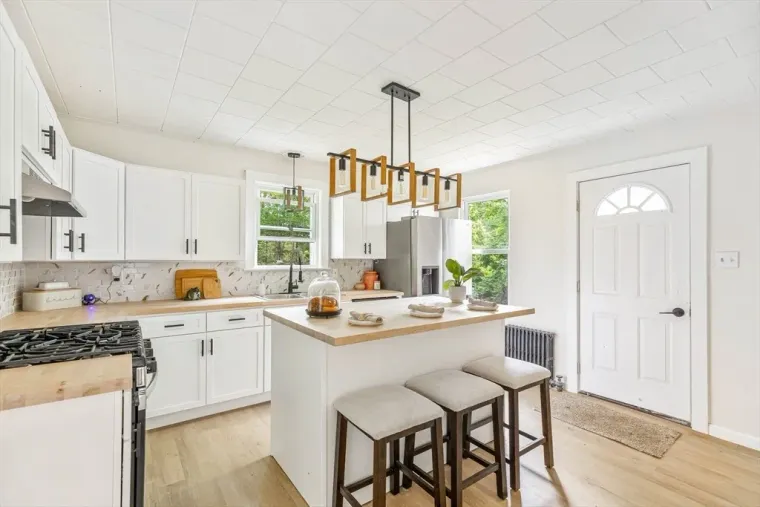
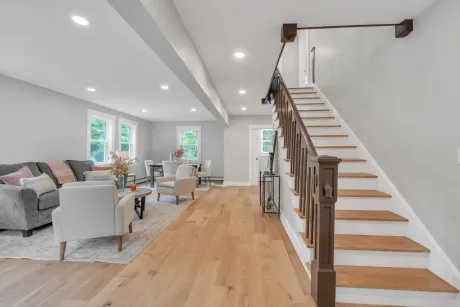
We actually buy and fix these homes
We’re not wholesalers flipping contracts. Here are real homes we’ve purchased and renovated.

Related guides
Plain-language Massachusetts guides that go deeper on the parts of this that matter most.
Other situations we buy houses in
Whatever is behind the sale, the process is the same — we buy as-is for cash across Massachusetts, on the date you choose.
Inherited a house
Probate-friendly, as-is, split easily among heirs.
Facing foreclosure
Move fast to stop the clock and protect your credit.
Going through divorce
A clean, fast sale that splits cleanly between parties.
Relocating
Sell on your schedule when a job or move comes up.
Tired landlord
Done with tenants and turnover? Sell with them in place.
House needs repairs
No fixes, no cleanup — we buy in any condition.
Downsizing
A simple, low-stress sale for the next chapter.
Vacant property
Stop paying to hold an empty house you don’t need.
Owe back taxes
Behind on property taxes? We can close before a tax taking.
Behind on payments
Behind on the mortgage? Sell to avoid foreclosure and protect your credit.
Fire-damaged house
We buy fire- and smoke-damaged homes as-is — no rebuild needed.
Water-damaged house
Flood, leak, or burst pipe? We buy as-is, mold and all.
House with mold
Mold problems? We buy as-is — no remediation needed.
Hoarder house
Leave everything — we handle the full clean-out.
Liens or title issues
Liens or title clouds? We work through them with you.
Condemned house
Code violations or condemned? We buy as-is and take it on.
Questions homeowners in this situation ask
I've only missed a couple of payments. Is it too early to think about selling?
Will selling now hurt my credit less than waiting?
What if I owe more in missed payments than I can catch up on?
How much below market will the offer be?
What if I owe more than the house is worth?
Is this legit? How do I know you are not going to take advantage of me?
How long does a loan modification take in Massachusetts?
Is a short sale better than a regular sale for my credit?
Where we buy houses in Massachusetts
We buy houses for cash statewide. These are some of the cities homeowners contact us from most.
- Sell my house fast in Worcester, MA
- Sell my house fast in Springfield, MA
- Sell my house fast in Lowell, MA
- Sell my house fast in Cambridge, MA
- Sell my house fast in Framingham, MA
- Sell my house fast in Quincy, MA
- Sell my house fast in New Bedford, MA
- Sell my house fast in Brockton, MA
- Sell my house fast in Lynn, MA
- Sell my house fast in Newton, MA
- Sell my house fast in Fall River, MA
- Sell my house fast in Plymouth, MA
Ready for your free cash offer?
No fees, no repairs, no obligation — just a fair, honest offer in 24 hours.